
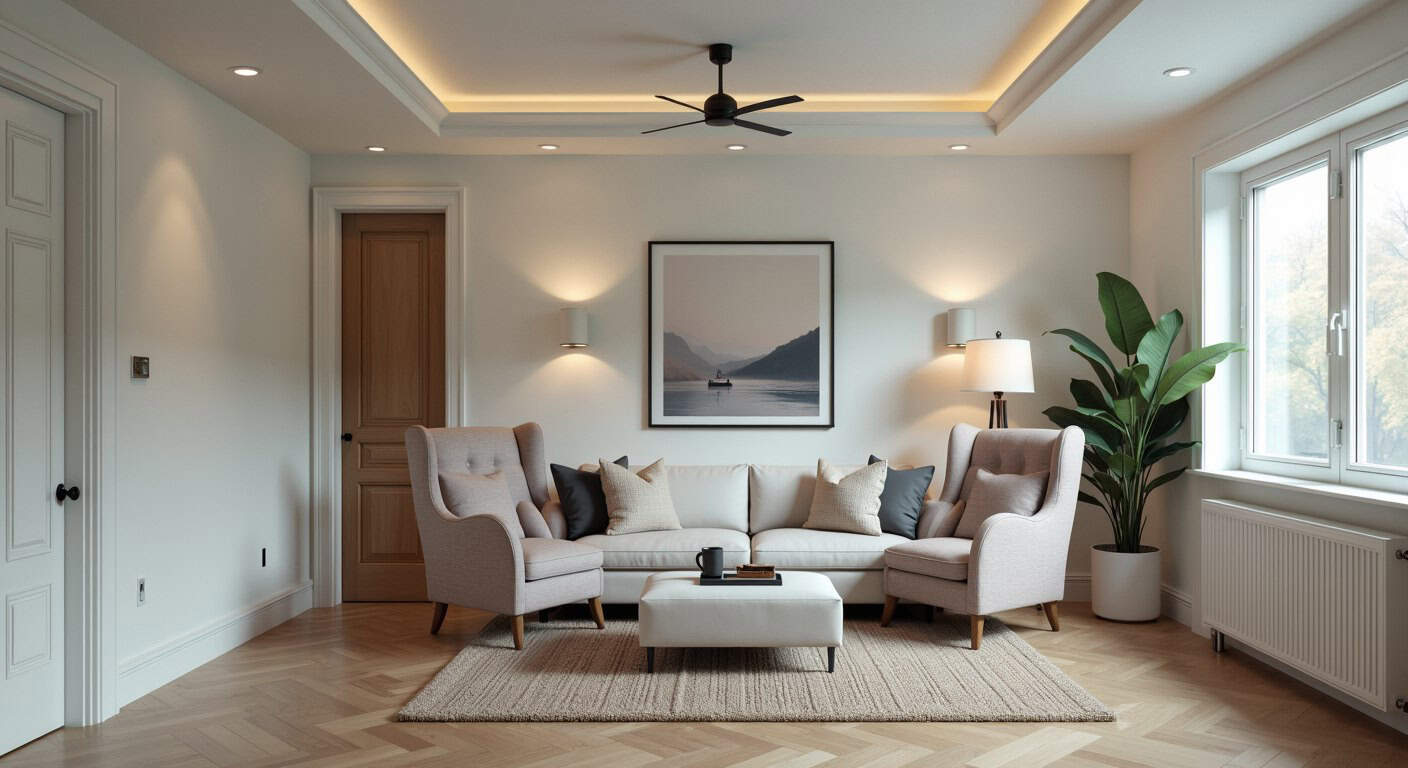
Good small living room layout ideas begin with measurements, not a shopping list. In a compact room, a sofa that is only six inches too deep can block a doorway, squeeze the main walking path, or force every other piece against a wall. This guide turns a Scandinavian look into a practical plan: measure the fixed constraints, choose one clear route through the room, size the seating and rug to the usable floor area, and add storage and lighting without crowding the layout.
Small living room layout ideas at a glance
| Room condition | Best starting layout | What to measure first | Common mistake |
|---|---|---|---|
| Long, narrow room | Sofa on one long wall; slim media unit opposite | Clear route from entry to the next room | Using a deep sectional that closes the passage |
| Square room | Sofa plus one movable chair around a central rug | Door swings and corner clearance | Pushing every piece to the perimeter |
| Open-plan corner | Rug and sofa back define the living zone | Dining circulation and kitchen route | Letting furniture interrupt the main path |
| Studio apartment | Compact sofa facing a wall-mounted or low media zone | Bed clearance and storage access | Choosing furniture that performs only one task |
| Rental with no construction allowed | Freestanding storage, plug-in lighting, removable art | Lease restrictions and wall type | Planning around recessed lights or built-ins |
Step 1: measure the usable room, not only the walls
Record the wall-to-wall length and width, then subtract the space that cannot hold furniture. A door needs room to open. A radiator needs safe clearance. A walkway cannot disappear because a coffee table looked small in a product photo. Mark each obstruction on graph paper or in a simple floor-planning app, using one square for a fixed unit such as six inches.
Next, identify the route people use most often. In many small living rooms, that route runs from the entry to a kitchen, hallway, balcony, or bedroom. Protect it before placing the sofa. A comfortable home does not need to copy commercial accessibility rules, but if mobility access is important, the U.S. Access Board uses a 36-inch continuous clear route as a useful reference point, with limited 32-inch narrow points. Treat that as an accessibility planning benchmark, not a claim that every private living room is legally required to meet it.
Also measure the diagonal through the entry door and any tight stair or elevator route. Furniture has to reach the room before it can fit the floor plan. Compare packaged dimensions as well as assembled dimensions.
Step 2: choose the room’s single priority
A compact room rarely supports every possible use equally. Decide whether its main job is conversation, television, reading, entertaining, working from home, or flexible daily use. That choice determines the focal point and prevents the layout from becoming a collection of compromises.
- Conversation first: angle one light chair toward the sofa so people do not sit in a straight line.
- Television first: place the screen where glare can be controlled and where a passage does not cross directly between screen and sofa.
- Flexible use: use a compact sofa, nesting tables, and one chair or ottoman that can move without lifting a heavy sectional.
- Work and living: choose a shallow desk or wall-mounted work surface and keep its chair outside the main route when not in use.
Write the priority at the top of the plan. When two furniture pieces compete for the same area, the priority decides which one stays.
Step 3: size the sofa by depth as well as width
Width is only half of the sofa decision. Deep arms, a chaise, or an overstuffed back can consume the passage even when the advertised width fits the wall. Tape the full footprint on the floor, including the chaise and the space needed to sit down comfortably. Then walk through the room as though the sofa were already there.
For a long narrow room, a straight sofa with slim arms usually preserves more usable width than an L-shaped sectional. In a square room, a compact sectional can work when its return defines a corner rather than pointing across the entry. An apartment-size sofa does not have to look temporary; good proportions, a raised base, and visible floor beneath the frame can make it feel lighter.
Step 4: place the rug and tables around movement
A rug should organize the seating zone without becoming a trip edge in the main route. Where possible, place at least the front legs of the sofa and chair on the rug so the pieces read as one group. A very small rug floating beneath a large coffee table can make the room look more fragmented.
Choose the coffee-table shape after the circulation path is visible. A round or oval table softens a tight route and removes sharp corners. Nesting tables can separate when needed and stack when the floor must be cleared. An upholstered ottoman can provide a footrest and occasional table when used with a stable tray, but confirm that it does not block storage or the sofa’s seating depth.
Leave enough room to stand up and pass between seating and the table. Instead of relying on one universal number, test the distance with tape because seat depth, mobility needs, and the way the room is used vary.
Step 5: build Scandinavian calm with contrast and texture
Scandinavian style is useful in a small room because it favors clear shapes, practical storage, natural materials, and controlled contrast. It does not require an all-white room. Start with a quiet background, then use wood, woven texture, and one darker note to prevent the space from feeling washed out.
A dependable starting palette is warm white, pale or medium wood, soft gray or oatmeal fabric, and a small black or deep charcoal accent. Check the white against the floor and upholstery before painting. Warm wood can expose a blue or gray cast in a white that looked neutral in the store. The same sample should be viewed in morning light, late afternoon, and under the lamps used at night.
For more detailed color testing, use the Housify home color-palette guide. If the room needs wall decor after the furniture plan is fixed, compare the available wall width with these DIY wall art ideas for a living room.
Step 6: add storage without creating a second wall
Storage helps only when it remains accessible. One tall cabinet may use less floor area than several low pieces, but it should not crowd a doorway or make a narrow corner feel blocked. Closed storage hides visual noise; open shelves work best when they hold a limited number of useful or meaningful objects.
- Use the space below a television only if doors and drawers can open without hitting the coffee table.
- Prefer side tables with a shelf or drawer when small items otherwise collect on the floor.
- Use baskets inside shelving rather than adding separate baskets throughout the room.
- Keep frequently used items between knee and shoulder height when bending or reaching is difficult.
- Anchor tall furniture according to the manufacturer’s instructions and the wall type.
Step 7: use layered, renter-safe lighting
A single ceiling fixture often creates a bright center and dark corners. Layer ambient light with a reading or task light and one softer accent source. A floor lamp beside the sofa can serve reading needs without electrical work. A plug-in wall light can free a side table, but route the cord so it does not cross a walkway.
Warm residential lighting around 2700K to 3000K often supports wood and neutral textiles, but the right choice depends on the room and the tasks performed there. Use matching or deliberately coordinated color temperatures so one corner does not appear blue while another looks orange.
Renters can achieve most of this plan with plug-in fixtures, removable picture-hanging systems rated for the actual load, freestanding shelves, and a rug. Recessed lighting and demolition are not prerequisites for a room that feels organized and calm.
Three budget levels for the same layout
Refresh: use the furniture already owned
Measure and rearrange first. Remove one obstruction from the main route, move lighting next to the task it serves, edit visible accessories, and use a larger existing rug if another room has one that fits. This level may require no new furniture.
Targeted upgrade: replace the worst-fitting piece
Replace the item that causes the greatest layout problem—often a sofa that is too deep, a coffee table with poor clearance, or scattered storage. Add one lamp or textile only after the footprint works.
Full furnishing plan: buy in layout order
Buy the sofa first, then the rug, movable chair, table, storage, and lighting. Confirm each delivered piece against the taped plan before ordering the next. This prevents a collection of individually attractive products from becoming an unusable room.
A final small-room checklist
- The main route is visible and wide enough for the people who use it.
- Doors, drawers, and storage open fully.
- The sofa footprint includes arms, chaise, and recline movement.
- The rug connects the seating rather than floating alone.
- At least one light supports reading or another real task.
- Cords and table corners do not intrude into the route.
- The palette was checked beside fixed finishes in daytime and at night.
- Rental restrictions and wall construction were checked before mounting anything.
Frequently asked questions
Should a small living room sofa always go against a wall?
No. A few inches of breathing room can make curtains, outlets, and cleaning easier. In an open plan, the sofa back can also define the living zone. The correct position is the one that protects the route and supports the room’s priority.
Is a sectional a bad choice for a small room?
Not automatically. A compact sectional can use a corner efficiently, but a deep chaise can also block circulation. Tape its complete footprint and compare it with a straight sofa plus a movable chair.
How can a rental living room feel built in?
Repeat a limited palette, align the top edges of storage, use full-height curtains where allowed, and light the same zones a permanent plan would serve. Visual continuity matters more than construction.
What should be purchased first?
Purchase only after measuring. Among furnishings, start with the largest footprint—the sofa—because every rug, table, and chair position depends on it.
Plan the route before the reveal
The strongest small living room transformation is not a demolition sequence. It is a room that becomes easier to enter, sit in, use, store things in, and light. Measure the fixed constraints, protect the main route, choose furniture by full footprint, and let the Scandinavian palette support that plan. The result may look calmer, but more importantly, it will work better every day.
For another perspective on compact proportions, see this small modern living room guide. For accessibility-specific circulation requirements, consult the U.S. Access Board’s accessible-route guidance and apply the relevant requirements with a qualified professional.
Leave a Reply