
What You’ll Learn
- What defines Japandi style and its key elements
- How to source authentic Japandi furniture and decor
- Step-by-step renovation process for a Japandi living room
- Budget-friendly IKEA picks to achieve this luxe look
- Expert styling tips for a cohesive Japandi space
Imagine walking into a space where the tranquil simplicity of a Japanese zen garden meets the cozy warmth of Scandinavian hygge. This is the essence of Japandi style interior design — a thoughtful fusion that’s rapidly becoming the defining aesthetic of 2026 for those seeking both serenity and sophistication in their homes.
Japandi isn’t just another passing fad. This harmonious blend of Japanese minimalism and Scandinavian functionality creates spaces that feel both timeless and thoroughly modern, with an emphasis on natural materials, clean lines, and purposeful simplicity. Every object earns its place. Every surface breathes.
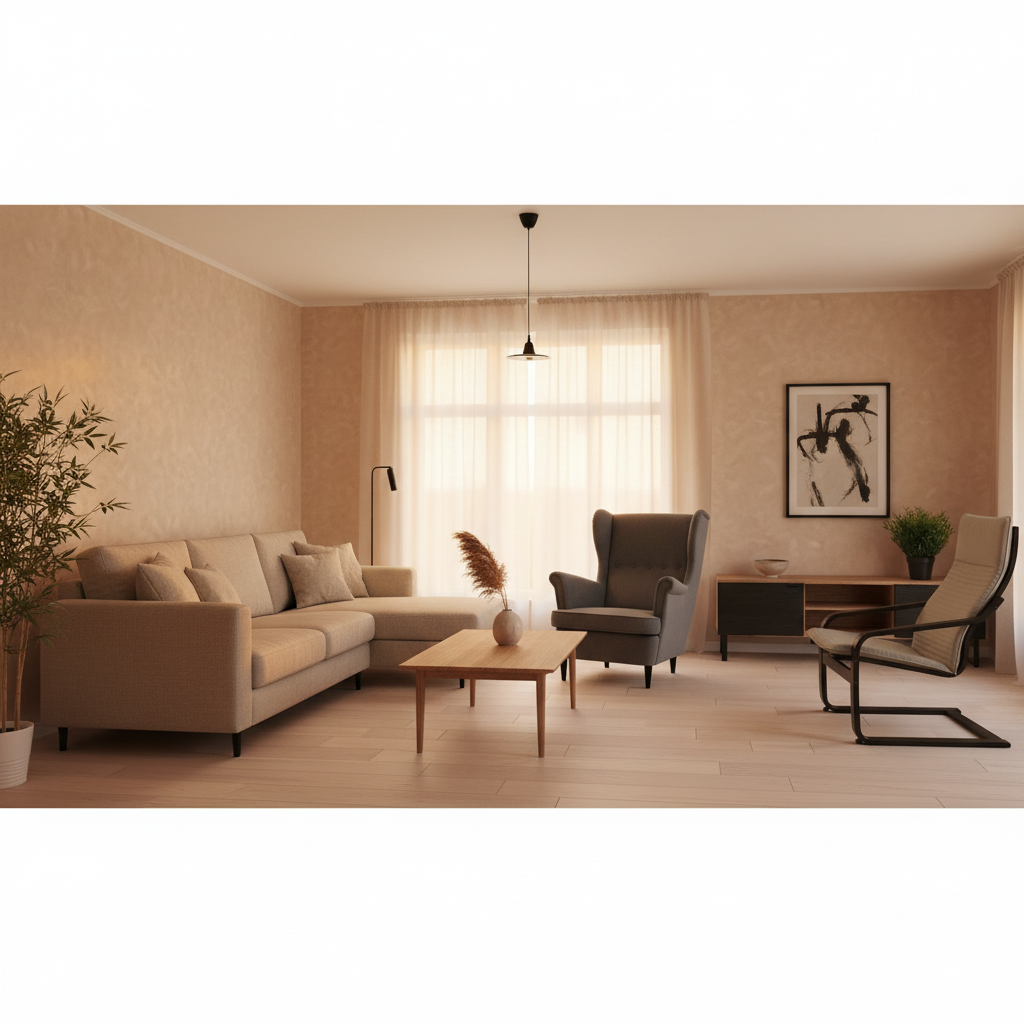
This guide demonstrates exactly how a cluttered, outdated living room can be transformed into a serene Japandi retreat — using carefully curated IKEA pieces that marry form, function, and affordability. From the KIVIK sofa’s clean profile to the LISABO coffee table’s natural ash veneer, every product was chosen to embody the wabi-sabi philosophy: beauty found in imperfection and nature.
Shop the Look
Recreate this Japandi living room with these handpicked IKEA pieces.


The Renovation Journey: From Abandoned to Japandi Sanctuary
Every great Japandi space starts with a blank slate. The following 7-stage transformation demonstrates how a tired living room can be converted into a magazine-worthy Japandi retreat.
Stage 1: The Blank Canvas
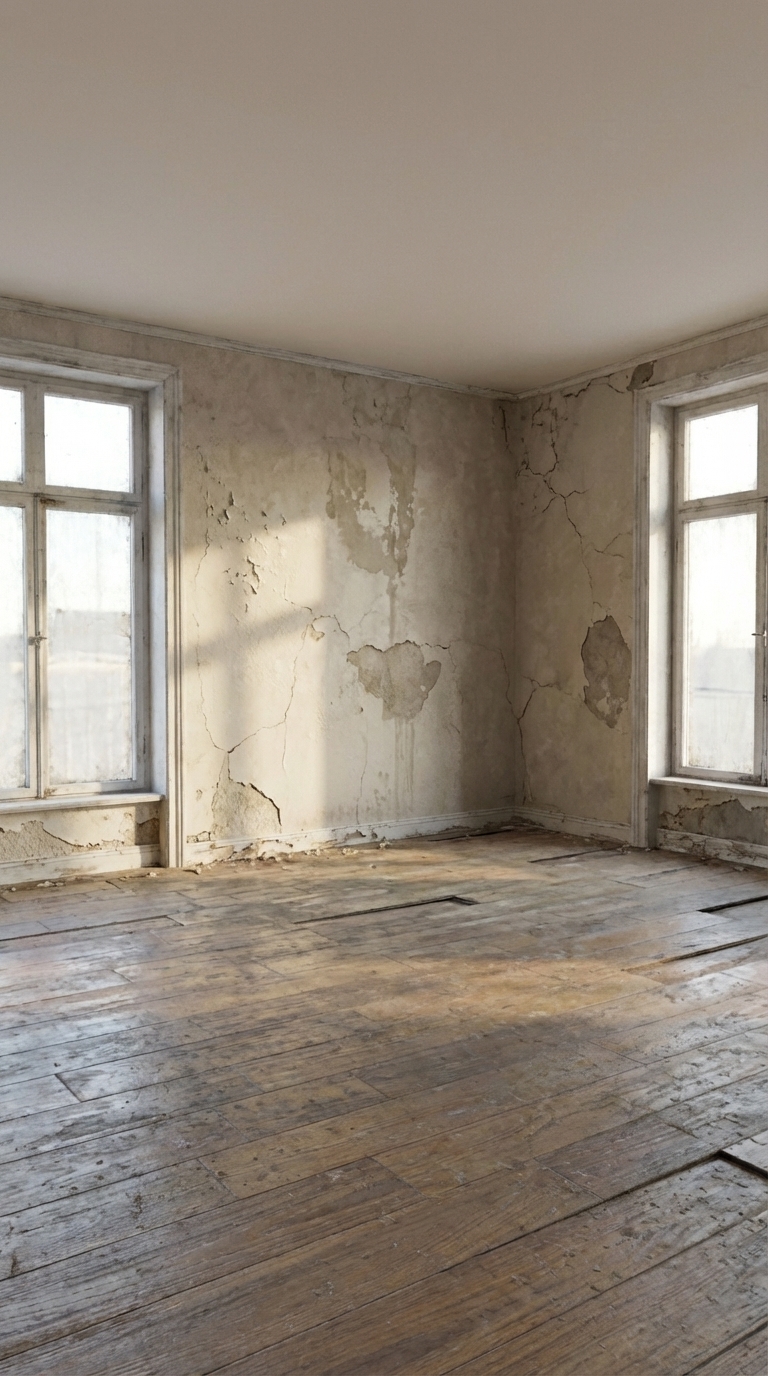
Before the renovation began, this space was a forgotten room — peeling paint, worn floors, bare windows letting in harsh daylight. The neglected shell actually made it easier to envision the clean, breathing space it would become. In Japandi philosophy, the space must first be emptied before it can be filled with intention.
Stage 2: Demolition — Stripping to the Bones
Old flooring was removed and dated wall surfaces were demolished, exposing the raw structure beneath. Dust, debris, and the energy of transformation filled the space. This is where the old story ends and the new one begins.

Stage 3: Structural Framing
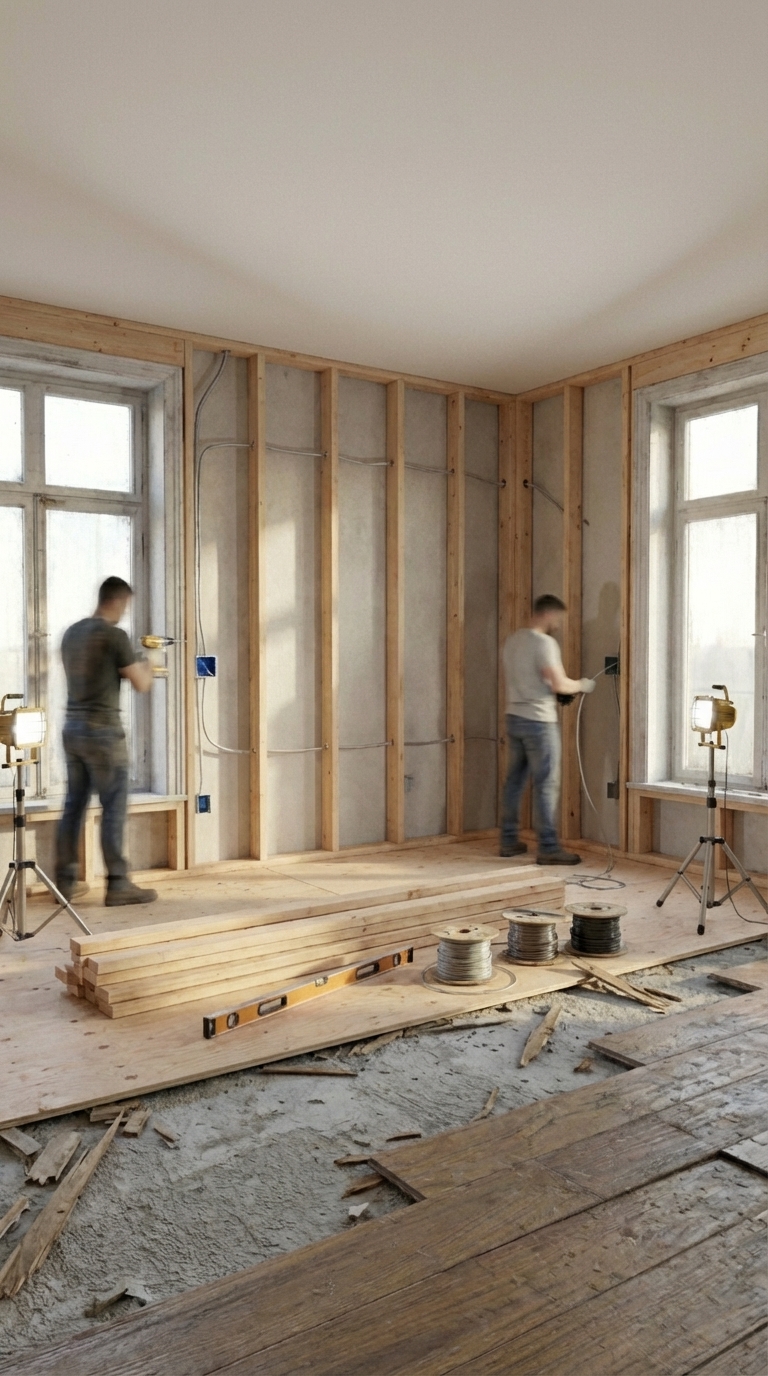
Fresh wall studs were installed, electrical wiring was threaded through, and new plywood subfloor panels were laid. The skeleton of the Japandi room was taking shape — clean, precise, built to last.
Stage 4: Drywall & Subfloor
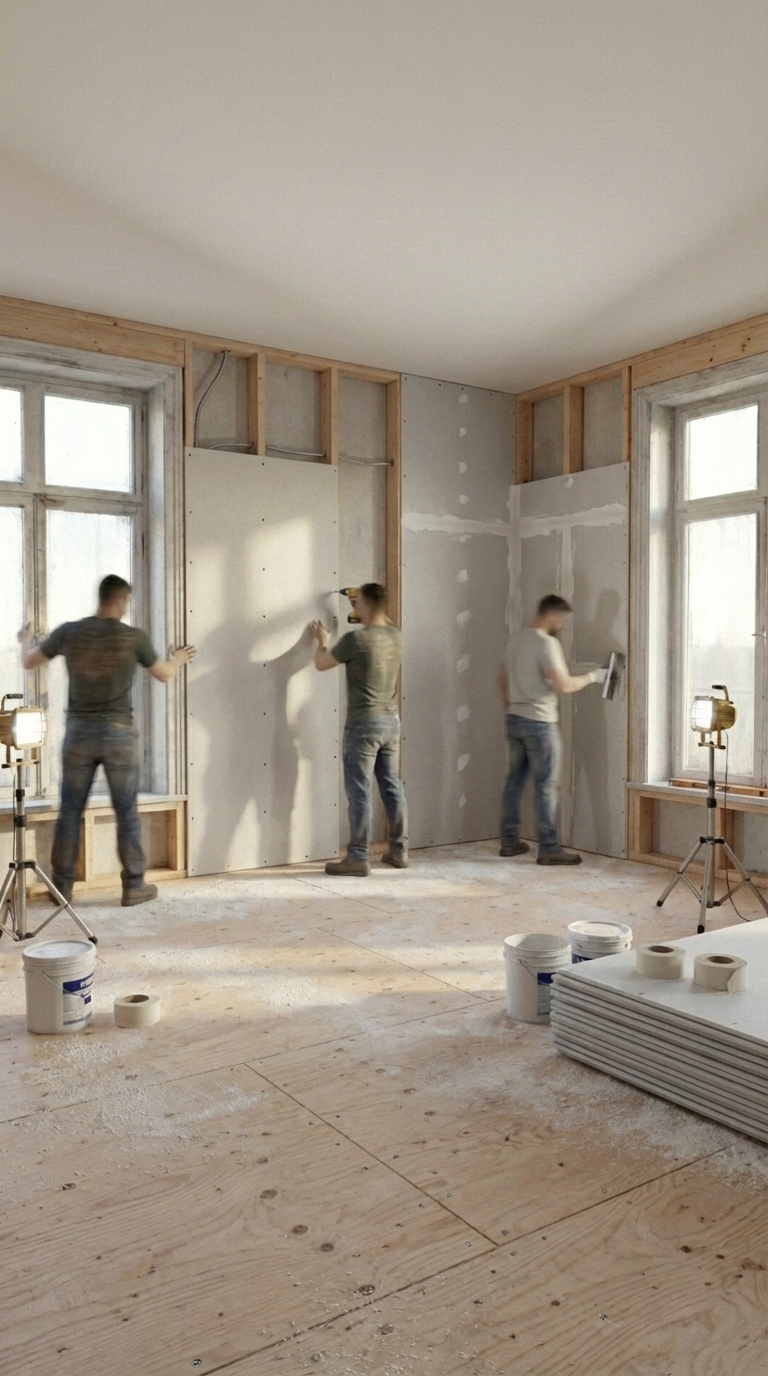
New drywall sheets closed up the walls, creating the smooth, flawless canvas that Japandi interiors demand. Joint compound was applied over every seam — the surface becoming as intentional as the design itself.
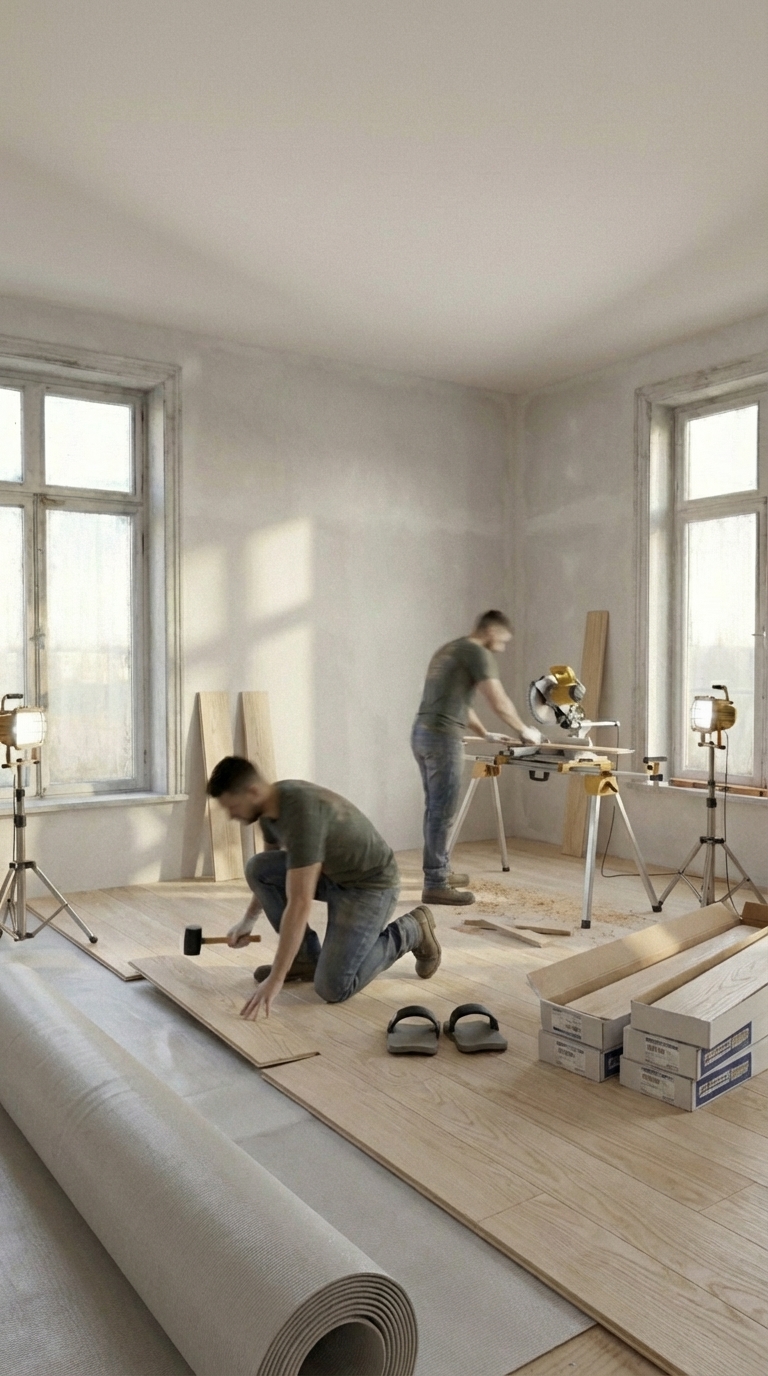
Stage 5: Natural Ash Hardwood Flooring
Wide-plank ash hardwood flooring was laid row by row from the far wall forward. The warm, natural grain immediately set the Scandinavian tone — grounding the space with organic warmth that pairs perfectly with Japanese minimalism.
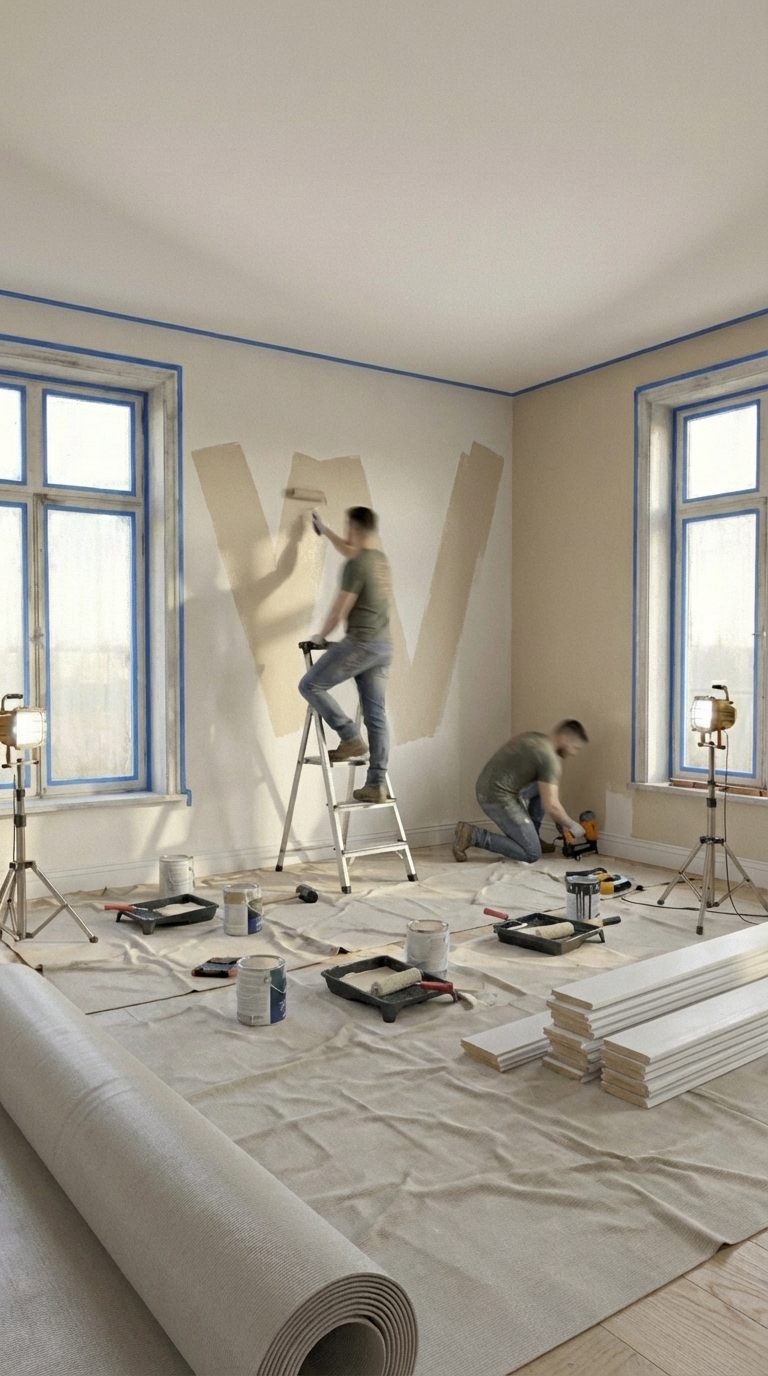
Stage 6: Warm Oatmeal Paint & Trim
Walls were painted in a carefully selected warm oatmeal — a color that absorbs golden-hour light and radiates calm. New slim white baseboards were installed, framing each wall with quiet precision.
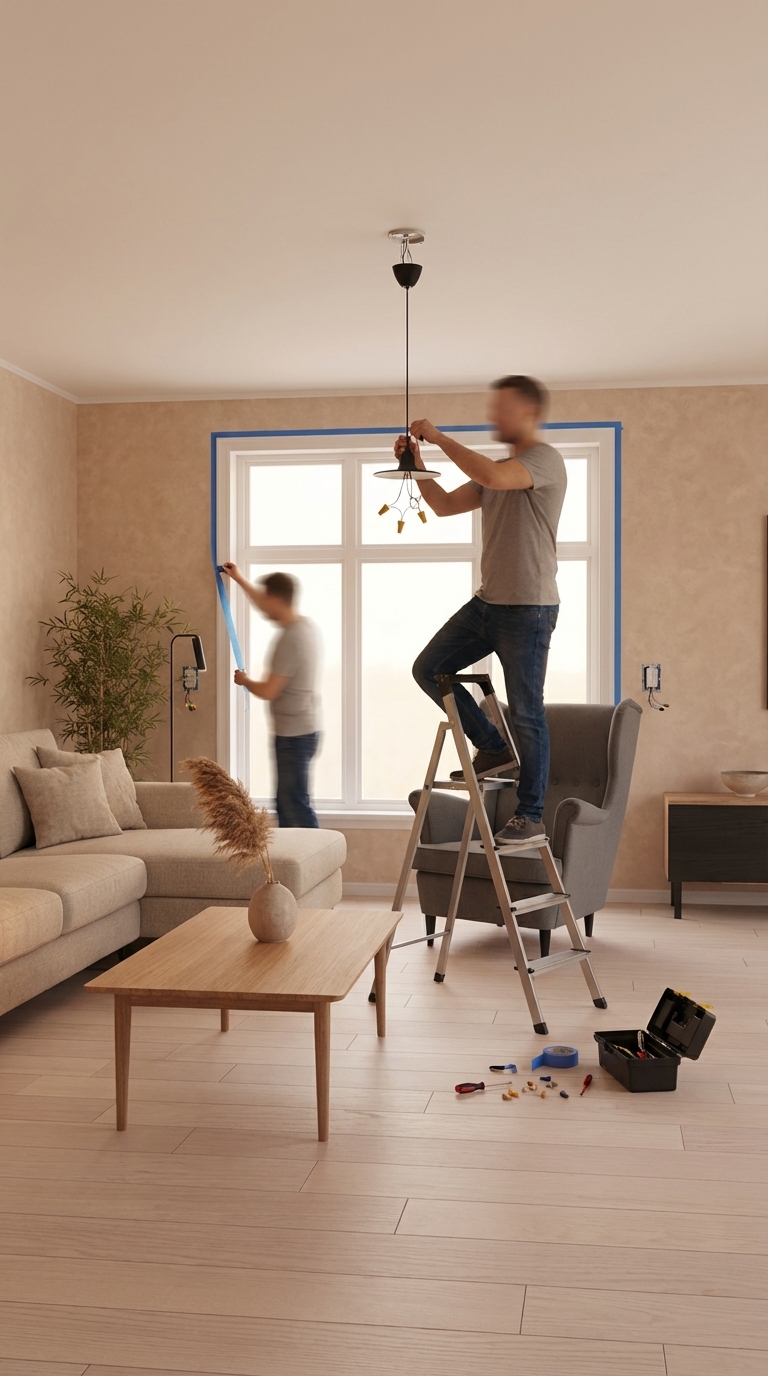
Stage 7: Fixtures & Final Details
The final 5% — pendant light wiring, dimmer switch plates, and painter’s tape peeled from crisp trim lines. This is the moment when a renovation becomes a home. Every fixture was chosen for its understated elegance, and every hardware piece is matte black to anchor the palette.
Essential Japandi Design Principles
1. Embrace Natural Materials
Japandi design lives and breathes through natural materials — ash wood, linen, rattan, bamboo, and wool. The LISABO coffee table’s ash veneer and the GAMLEHULT ottoman’s rattan weave are perfect examples of bringing raw, organic texture into a modern space without overpowering it.
2. Master the Art of Negative Space
In Japandi, empty space is not wasted space — it is intentional breathing room. Spaces should begin with fewer pieces than initially expected. The KIVIK sofa, a single LISABO coffee table, and one POÄNG armchair can define an entire living room without competing for attention.
3. Muted, Nature-Inspired Color Palette
The Japandi color palette draws from nature: warm whites, sandy beiges, charcoal grays, deep black-browns, and muted sage greens. Bright or saturated colors should be avoided — they shatter the calm. The STRANDMON wing chair’s dark gray and KIVIK’s light beige demonstrate masterful Japandi tonal balance.
4. Choose Quality Over Quantity
Investment in fewer, better pieces is recommended. The HEMNES TV unit in solid pine will outlast ten flat-pack alternatives. In Japandi philosophy, every object should earn its place — and earn it for decades.
5. Bring Nature Indoors
A single sculptural plant — like the FEJKA bamboo — does more for a Japandi room than a dozen small decorative objects. Vertical greenery adds life, height, and the organic element that connects the interior to the natural world.
Frequently Asked Questions
What colors work best in Japandi interior design?
Warm neutrals should serve as the base — warm whites, soft grays, sandy beiges, and taupe. Accents should include muted nature-inspired tones like sage green, clay, and pale terracotta. Bright or highly saturated colors should be avoided as they disrupt the calm atmosphere Japandi requires.
What is the difference between Japandi and Scandinavian design?
Scandinavian design focuses on functionality, light colors, and hygge (cozy warmth). Japandi adds the Japanese wabi-sabi philosophy — embracing imperfection, natural aging, and deeper connection to nature. The result is warmer and more grounded than pure Scandi, with darker accents and more intentional minimalism.
Is Japandi style suitable for small spaces?
Absolutely — it is ideal for small spaces. The emphasis on negative space, low-profile furniture, and restraint in objects means Japandi rooms feel open and airy even when compact. The POÄNG armchair and LISABO coffee table are both excellent space-efficient Japandi choices.
Can Japandi style be achieved on a budget with IKEA?
Yes — IKEA is arguably the best mass-market retailer for Japandi style. The KIVIK sofa, HEMNES TV unit, POÄNG armchair, and LISABO coffee table all hit the Japandi aesthetic at accessible price points. Focus should be placed on natural materials, muted colors, and clean lines when selecting pieces.
How should a Japandi living room be styled?
Start with a neutral base — warm white or oatmeal walls and ash or oak floors. Add a low-profile sofa in beige or gray, a solid wood coffee table, one statement armchair, and a single tall plant. Layer with linen cushions and a flatwoven rug. Restraint is the defining principle of Japandi, so resist the urge to add more.
Your Journey to Japandi Serenity
Creating a Japandi-inspired space is more than following design rules — it is about crafting an environment that promotes peace and mindfulness every single day. The products in the Shop the Look section above were chosen not just for their aesthetic, but for their ability to transform how a room feels to live in.
Start with one anchor piece — the KIVIK sofa or the HEMNES TV unit — and build outward with intention. Let empty space be an ally. Let natural materials do the talking. And let the serene, grounded beauty of Japandi design make the home a true sanctuary.
Leave a Reply