

The best modern black and white living room ideas use contrast deliberately. A room does not become sophisticated simply because the walls are white and the sofa is black. The fixed finishes, daylight, furniture scale, texture, and lighting all decide whether the palette feels crisp and balanced or cold and visually heavy.
This guide replaces the idea of a one-click “$1,100 transformation” with a practical design method. The images on the page should be treated as design inspiration rather than documentation of a completed Housify renovation. Product links, when present, are optional examples; prices and availability must be checked with the retailer.
Modern black and white living room ideas at a glance
| Design direction | White role | Black role | Middle tone or texture | Main risk |
|---|---|---|---|---|
| Bright and graphic | Walls and large upholstery | Frames, lamp, table base | Light oak and warm gray | Looking flat under cool bulbs |
| Soft monochrome | Warm white walls | Charcoal rather than pure black | Oatmeal, boucle, pale wood | Losing definition between similar values |
| Dark and enveloping | Ceiling, trim, or art contrast | One or more walls | Cognac leather and brass | Dark surfaces swallowing details at night |
| Rental-friendly | Existing walls | Rug, frames, lamp, removable textiles | Wood and plants | Too many small unrelated accents |
| Family practical | Washable or durable light surfaces | Patterned textiles and forgiving finishes | Medium gray and natural fiber | High-maintenance white upholstery |
1. Read the fixed finishes before choosing the white
Flooring, stone, tile, built-ins, and large furniture already carry undertones. A cool blue-white can clash with a warm beige floor; a creamy white can appear yellow beside a cool gray sofa. Place large paint samples beside every finish that will remain and observe them on more than one wall.
Sherwin-Williams distinguishes cool whites, which can support blue and other cool hues, from warm whites with yellow or red undertones that coordinate more naturally with warm furnishings. That distinction is more useful than choosing the “brightest white available.” Daylight direction and evening bulbs can make the same sample change substantially.
Compare at least three whites: one warm, one balanced, and one cool. Review them in morning light, late afternoon, and after dark. If the room has little natural light, a high-reflectance white may still look gray when the light itself is weak. Paint cannot replace adequate lighting.
2. Decide how much black the room can support
Black attracts visual attention and can make an object appear heavier. That makes it useful for defining a fireplace, window frame, shelving unit, or one anchor piece. It also means that several large black objects can compete with one another in a compact room.
Use the room’s light and size to choose the distribution:
- Low-risk start: white background, medium-tone sofa, black frames, lamp, and table base.
- Balanced contrast: light walls with one black sofa or cabinet, repeated in two smaller accents.
- Dark-room approach: black or near-black walls with light art, trim, upholstery, and layered warm lighting.
Do not scatter small black objects evenly around the room just to “repeat the color.” Grouping accents into a few intentional areas usually creates a calmer composition.
3. Use a middle tone so the contrast is not abrupt
A successful monochrome room often contains more than black and white. Warm gray, greige, light oak, walnut, cognac, woven natural fiber, and green plants can bridge the two extremes. The middle tone lets the eye move through the room instead of jumping between bright and dark blocks.
One practical distribution is a light background across the largest area, a medium tone across the rug or sofa, and black on the focal piece and smaller structural accents. This is a starting framework, not a rigid formula. Adjust it after viewing the room’s actual fixed finishes.
For alternative warm, green, blue, and dark schemes, compare the room against the Housify color-palette guide.
4. Layer texture to keep monochrome from feeling flat
When color variation is limited, surface variation becomes more visible. Combine matte and softly reflective finishes rather than making every object glossy or every textile fuzzy. A wool-look rug, linen curtain, smooth ceramic, grained wood, and metal lamp can all share the same narrow palette while remaining visually distinct.
Texture should also match daily use. A delicate white boucle sofa may not be the best choice for pets, young children, or frequent eating in the living room. A washable slipcover, patterned gray textile, or leather accent can preserve the palette with less maintenance. Check care instructions before buying.
5. Build the furniture plan before selecting products
Measure the room, door swings, windows, outlets, and the main route. Tape the sofa, chair, rug, and table footprints on the floor. A black sectional that dominates a product photo may overwhelm a narrow room, while a slim black sofa on visible legs can feel much lighter.
Choose one focal point: conversation, television, fireplace, view, or artwork. Arrange the largest seating toward that point, then add only the pieces that support the room’s actual use. If a chair blocks the route or is rarely used, it is not improving the plan simply because it completes a set.
In a compact room, compare this method with the measured small living room layout guide. It explains how to protect circulation, check sofa depth, and select movable tables.
6. Select the rug using the seating footprint
A black-and-white geometric rug can become the focal pattern, but it should still connect the seating. Where possible, place the front legs of the sofa and chair on the rug. A small rug floating beneath the coffee table can make the furniture group look disconnected.
Pattern scale matters. Large graphics create a stronger visual effect and can compete with bold wall art. A quieter textured rug is easier to combine with expressive art or patterned upholstery. Print a photo of the room and sketch both options before committing.
7. Light black surfaces, not only white ones
White surfaces return more light; black surfaces absorb more. A dark sofa or wall can lose detail when the only source is a ceiling fixture. Use ambient light for the room, task light near reading or work areas, and accent light for art, shelving, or a dark architectural surface.
Warm residential lamps around 2700K to 3000K often soften a stark black-and-white scheme, while cooler lamps can emphasize a sharper gallery effect. Choose based on the room’s function and keep nearby sources reasonably consistent. Check the color rendering of lamps when art, fabric, or wood tones matter.
8. Choose wall art by size and contrast
Black-and-white art is not the only option. A limited-color photograph, warm abstract, or natural-material wall piece can provide the middle tone the room needs. Measure the available wall area after the furniture is placed. Art should relate to the furniture below it rather than float as a small isolated object.
If creating art is preferable to buying it, use these DIY wall art ideas for a living room to compare project size, cost, time, and renter suitability.
9. Make the scheme practical for children, pets, and rentals
For children and pets
Use washable textiles, removable cushion covers, rounded table edges, and finishes that do not show every fingerprint. Medium gray and patterned black-and-white surfaces can hide daily wear better than uninterrupted white or glossy black.
For renters
Keep existing walls and bring contrast through curtains, a rug, framed art, a lamp, and removable cushion covers. Verify the lease before painting or mounting heavy objects. Freestanding shelving should still be anchored where required by its manufacturer and safe wall attachment is allowed.
For low-light rooms
Use black on fewer, more deliberate elements and preserve light surfaces near the window. Add lamps before deciding that the room needs brighter white paint. A light room is produced by light sources, reflection, and layout together.
A three-level budget plan
Level 1: restyle the existing room
Remove unrelated accents, regroup black objects, move lamps to the tasks they serve, and introduce one middle-tone textile. Test paint samples without buying furniture. This level can change the visual balance with minimal spending.
Level 2: replace the highest-impact mismatch
Replace the rug if its size fragments the seating, the lighting if dark surfaces disappear at night, or the largest furniture piece if its scale blocks circulation. Solve the functional problem before adding decorative objects.
Level 3: furnish from a measured plan
Buy in footprint order: anchor seating, rug, secondary chair, table, storage, lighting, and art. Record current prices when comparing products, but do not present a product subtotal as the cost of a renovation. Furniture does not include construction, labor, tax, delivery, installation, disposal, or repairs.
A black-and-white room checklist
- The chosen white was tested beside the floor and upholstery.
- Black has one clear anchor rather than many competing anchors.
- A middle tone connects the light and dark areas.
- Texture varies across textiles, wood, ceramic, and metal.
- The furniture footprint protects the main route.
- The rug connects the seating and does not create a trip edge.
- Dark surfaces retain detail under evening lighting.
- Product care requirements match the household.
- Images are understood as inspiration unless a documented project source is provided.
Frequently asked questions
Does a black-and-white living room need gray?
No, but a middle tone often makes the contrast easier to live with. Wood, natural fiber, cognac, green plants, and warm metal can perform the same bridging role.
What white works best with black furniture?
There is no universal best white. Compare warm, balanced, and cool samples beside the furniture and fixed finishes. Sherwin-Williams recommends coordinating the white’s undertone with the room’s other hues, while Benjamin Moore shows several black-and-white pairings with different value and undertone relationships.
Will a black sofa make a small room look smaller?
It can appear visually heavy, but scale, leg height, surrounding contrast, and lighting matter. A correctly sized sofa with visible floor beneath it may work better than a larger pale sofa that blocks circulation.
Can black and white feel warm?
Yes. Use a warm white, wood, woven texture, warm lamps, and a small amount of cognac or brass. Warmth comes from undertone, material, and light—not from adding many unrelated colors.
Build the contrast around the real room
A modern black-and-white living room succeeds when the palette supports the room’s light, fixed finishes, circulation, and daily use. Test the white, limit the number of black anchors, introduce a useful middle tone, and light the dark surfaces. Products can support that plan, but they cannot substitute for it—and a furniture subtotal should never be presented as proof of a completed renovation.
For official color guidance, review Sherwin-Williams’ guide to warm and cool whites and Benjamin Moore’s living-room color combinations. Always test physical samples in the room before making the final decision.
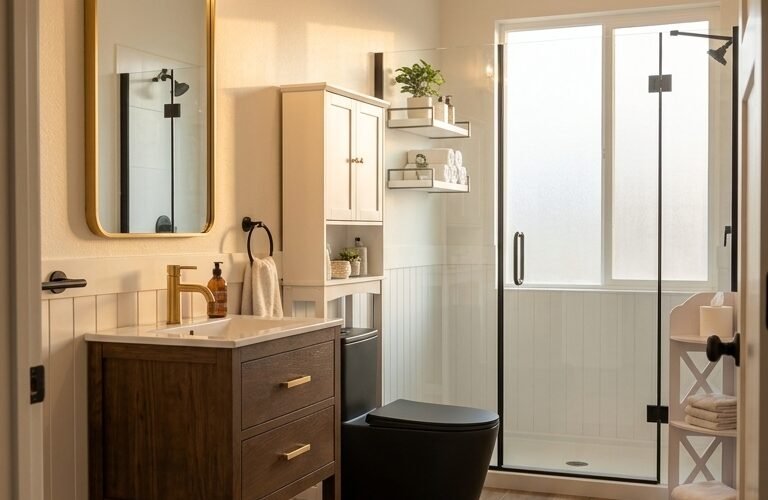

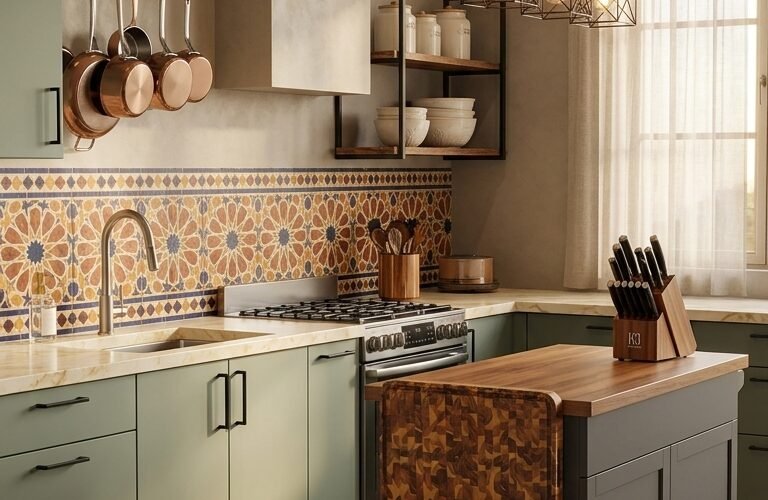
[…] these DIY wall art ideas for a living room. A monochrome direction is easier to visualize in this black-and-white living room guide, while a soft green kitchen is explored in the DIY kitchen backsplash […]