
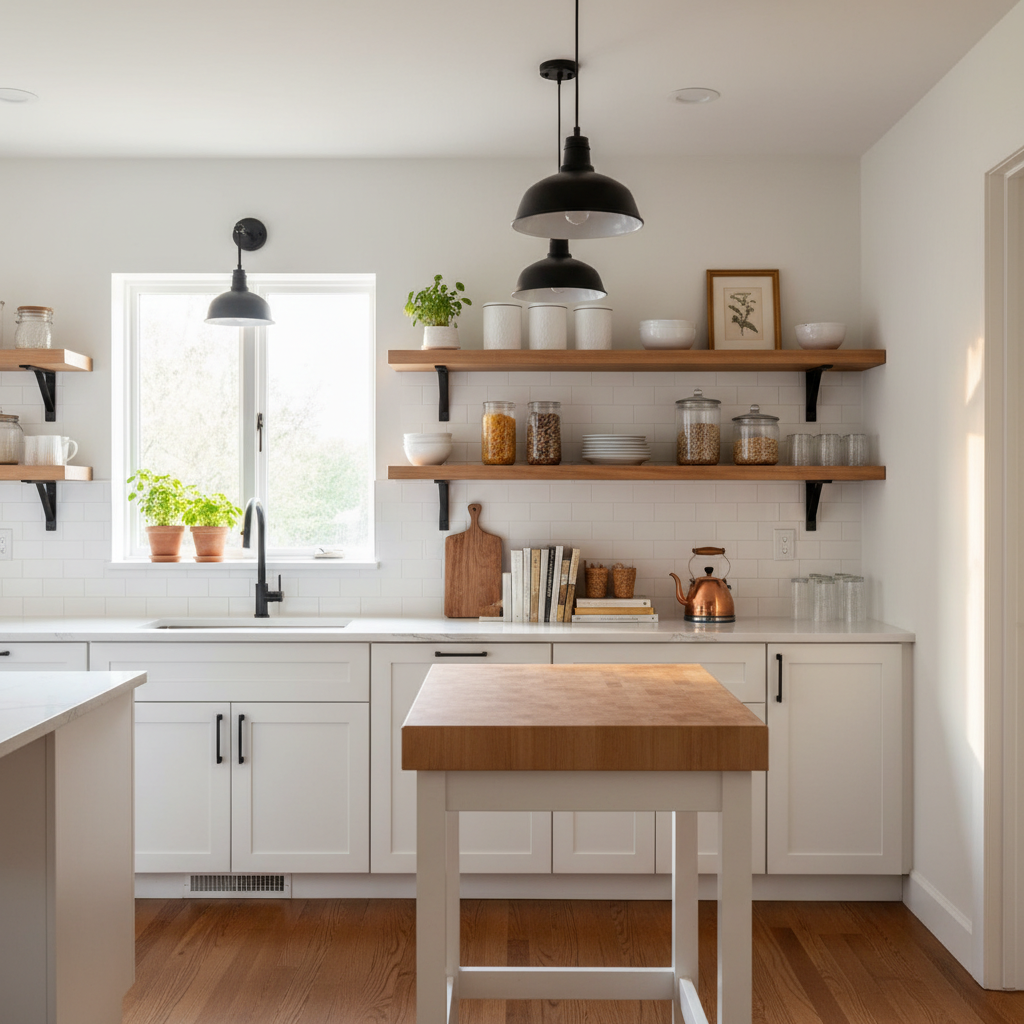
Ready to embrace the airy, modern aesthetic of open shelving in a kitchen? This increasingly popular design choice does more than just store essentials — it transforms a kitchen into a curated display that combines style with functionality. From minimalist floating oak shelves to bold industrial-style brackets, open shelving creates an inviting space that makes cooking more enjoyable while keeping everything within easy reach.
This complete guide walks through everything needed to know about designing, installing, and styling open kitchen shelves that look like they belong in a design magazine — and actually work for real everyday life.
Why Open Shelving Works in Modern Kitchens
Open shelving has surged in popularity for good reason. Unlike closed upper cabinets that can make a kitchen feel heavy and enclosed, floating shelves open up the room visually, making even compact kitchens feel larger and airier. They force intentional organization — everything on display needs to earn its place — and reward the space with a kitchen that feels curated rather than cluttered.
The key is balance: enough items to feel warm and lived-in, but with enough breathing room that the shelves never feel chaotic. When that balance is achieved, open shelving becomes one of the most impactful design decisions a kitchen can feature.
1. Start with the Right Shelf Material
The material chosen sets the tone for the entire kitchen. Natural oak or walnut wood shelves bring warmth and organic texture — perfect for modern farmhouse, Scandinavian, or transitional kitchens. White painted MDF shelves suit ultra-clean contemporary spaces. Industrial pipe-and-plank setups work beautifully in loft-style or urban kitchens. Whatever is selected, consistency matters: match shelf material to at least one other wood tone in the room — the island top, the floors, or the cabinet hardware.
2. Choose the Right Brackets
Matte black metal brackets are having a moment — and for good reason. They add a subtle industrial edge that grounds natural wood shelves beautifully. For a more seamless look, hidden floating shelf hardware gives the illusion that shelves are floating directly out of the wall. Overly ornate brackets should be avoided in modern kitchens — they compete with styled items rather than framing them.
3. Plan Your Shelf Heights Carefully
Upper shelves should sit roughly 18 inches above the countertop — enough clearance for comfortable use, but close enough that items feel reachable. Shelves should be spaced 12–14 inches apart vertically to accommodate plates, glasses, and taller jars comfortably. When installing two rows, the lower shelf should be positioned at approximately countertop height + 18 inches, and the upper shelf at + 30–32 inches.
4. Style with the Rule of Three
Interior designers rely on the rule of three: grouping items in odd numbers creates a more natural, dynamic arrangement. Three white canisters. A stack of plates flanked by a plant and a jar. A cutting board, kettle, and small basket. Odd groupings feel intentional without looking overly staged. Heights should be varied within each group — tall, medium, and short items — to create rhythm across the shelf.
5. Layer Textures and Materials
The most beautiful open shelves combine multiple materials. Ceramic next to glass next to woven rattan. A copper kettle beside white porcelain. A linen-bound cookbook next to a clear glass canister. Each material catches light differently, adding depth and visual richness that a single-material display cannot achieve. At least three different materials per shelf should be targeted.
6. Use Matching Containers for a Cohesive Look
One of the quickest ways to elevate open shelving is to decant dry goods into matching glass or ceramic containers. Matching jars for pasta, rice, lentils, and flour immediately create visual harmony. Labels add a charming finishing touch. This also has a practical benefit — supplies can be assessed at a glance when running low.
7. Add Greenery
A small potted herb plant on a kitchen shelf serves double duty: it looks beautiful and it’s actually useful. Fresh basil, rosemary, or thyme on an open shelf brings life and color to what could otherwise feel like a static display. If great light near the shelves isn’t available, small trailing plants like pothos or a single succulent work just as well.
8. Keep Frequently Used Items at Eye Level
Open shelving looks great but it needs to be functional too. Frequently reached-for items — favorite mugs, daily plates, glasses — should be placed at the most accessible level. Upper shelves should be reserved for less-used items or purely decorative pieces. A beautiful shelf that requires tiptoeing for a morning coffee mug will quickly become frustrating.
9. Mix Display and Storage
Not everything on open shelves needs to be decorative. A row of neatly folded dish towels, a small woven basket corralling loose items, a wooden utensil holder — these practical items look perfectly at home on well-styled shelves when chosen thoughtfully. The goal is a shelf that looks curated, not sterile.
10. Edit Ruthlessly
The biggest mistake made with open shelving is overcrowding. When in doubt, one more item should be removed. Negative space is not wasted space — it’s what makes everything else look considered and intentional. After styling, each item should be evaluated: does it earn its place? If something feels like filler, it probably is.
11. Coordinate with Your Backsplash
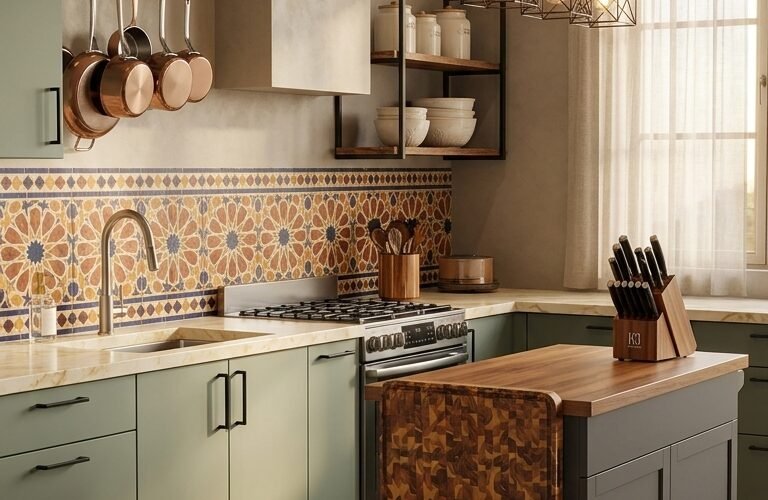
Open shelves sit in front of the backsplash, so the two need to work together. Classic white subway tile is universally flattering — it recedes behind any shelf styling without competing. Bold patterned tiles can work beautifully if shelf styling is kept simpler and more monochromatic. Busy backsplash + busy shelves should be avoided — one should anchor, one should shine.
12. Use Lighting to Your Advantage
Under-shelf LED strip lights are a game-changer for open kitchen shelving. They illuminate the countertop workspace and cast a warm glow on styled items at the same time. Even a single row of warm-white LEDs underneath the lower shelf transforms the kitchen atmosphere dramatically, especially in the evenings.
13. Consider Floating Shelves in a Corner
Corner shelving is one of the most underutilized spaces in kitchens. A set of floating corner shelves fills dead space beautifully — perfect for a coffee station, a collection of cookbooks, or a display of favorite ceramics. Corner shelves add depth and a sense of layering that flat wall shelves alone cannot achieve.
14. Keep It Clean — Literally
Open shelves accumulate dust and kitchen grease faster than closed cabinets. A weekly maintenance habit should be established: a quick wipe-down of the shelf surface and a light dust of displayed items keeps everything looking fresh. Items that are easy to move and clean around should be chosen — anything with too many crevices or fragile finishes near the stove should be avoided.
15. Commit to the Look
Open shelving rewards commitment. Half-hearted styling — a random assortment of mismatched items, items pushed to the back, shelves half-empty — looks worse than closed cabinets. But when commitment is made to the look with cohesive colours, intentional groupings, and regular editing, open kitchen shelves become one of the most beautiful and functional features a kitchen can have.
Frequently Asked Questions
Are open kitchen shelves practical for everyday use?
Absolutely — when designed thoughtfully. Everyday items should be placed at accessible heights, matching containers should be used for dry goods, and a simple weekly cleaning routine should be maintained. Open shelves can be just as practical as closed cabinets while adding far more visual impact.
How do I keep open shelves from looking cluttered?
Edit ruthlessly and embrace negative space. Items should be grouped in threes, heights should be varied, textures should be mixed, and anything that doesn’t earn its place should be removed. Less is almost always more with open shelving — when in doubt, one more item should be taken off.
What’s the best shelf depth for a kitchen?
10–12 inches is ideal for most kitchen items — deep enough for plates, glasses, and jars, but shallow enough that items at the back remain visible and reachable. Depths deeper than 14 inches should be avoided or the shelves start to feel heavy and harder to keep tidy.
How do I prevent open shelves from getting greasy near the stove?
Open shelves should be avoided directly above or beside the stove if possible. If installation is necessary, a good range hood that vents to the exterior is essential. Materials with easy-clean surfaces should be chosen — sealed wood or painted shelves wipe down much more easily than raw or oiled wood.
Can open shelving work in a small kitchen?
Open shelving is actually ideal for small kitchens. Replacing heavy upper cabinets with floating shelves instantly makes the space feel larger and less enclosed. Styling should be kept light and airy — whites, naturals, and glass — to maximize the open feel.
Ready to Transform Your Kitchen?
Open shelving is one of those design decisions that pays dividends every single day — every morning coffee, every dinner prep, every time a guest walks into the kitchen and says “wow.” The investment in thoughtful styling is small; the impact is enormous. Starting with one wall and committing to the look allows a kitchen to transform.
Leave a Reply