
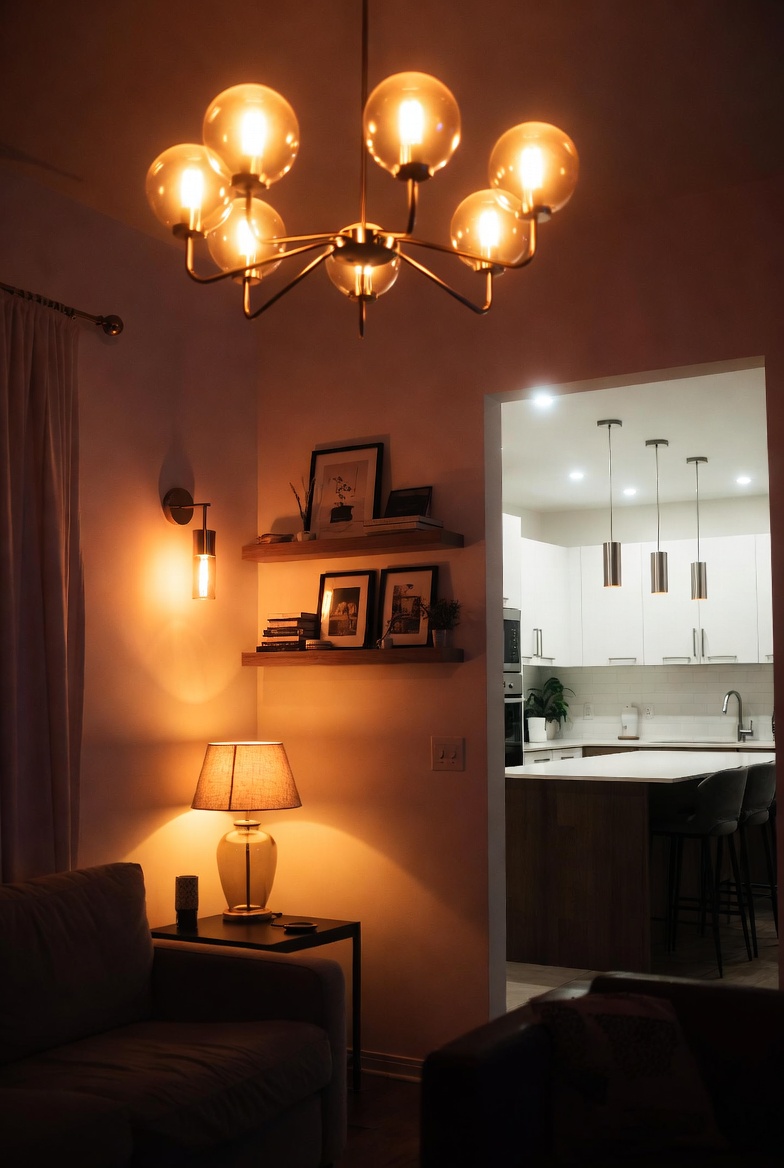
How to Choose the Perfect Lighting for Every Room in Your Home
Lighting is the single most underestimated element in home design. A space can have the most beautiful furniture, the perfect color palette, and stunning décor — but if the lighting is wrong, the room will never feel quite right. When lighting is chosen correctly, even a simple space can feel warm, luxurious, and intentional.
This guide walks through everything needed to know about choosing the right lighting for every room in a home — from the types of lighting to layer, to specific tips for kitchens, living rooms, bedrooms, and bathrooms.
The Three Layers of Lighting You Need in Every Room
Professional designers always work with three layers of light. Missing any one of them and the room will feel flat or uncomfortable.
1. Ambient Lighting (General Light)
This is the base layer — the general illumination that fills the room. It comes from ceiling fixtures, recessed lights, or flush-mount lights. Every room needs a strong ambient light source as its foundation.
2. Task Lighting (Functional Light)
Task lighting is focused, functional light that helps with specific activities — reading, cooking, applying makeup, or working at a desk. Under-cabinet lights in the kitchen, bedside lamps, and desk lamps all fall into this category.
3. Accent Lighting (Decorative Light)
Accent lighting adds depth, drama, and personality to a room. Think wall sconces that highlight art, LED strip lights under kitchen cabinets, or picture lights above a fireplace. This layer is what separates a designer space from an average one.
Room-by-Room Lighting Guide
Kitchen Lighting
The kitchen needs the most thoughtful lighting plan of any room because it serves multiple functions — cooking, eating, socializing, and working.
- Recessed downlights for bright, even ambient light across the whole space
- Pendant lights over the island for task lighting and style — hang them 30-36 inches above the countertop
- Under-cabinet LED strips to illuminate the work surface and eliminate shadows
- Dimmers on everything so the space can shift from bright cooking mode to relaxed dining mood
Living Room Lighting
The living room needs to flex between multiple moods — bright for daytime activities, warm and cozy for evenings.
- A statement ceiling fixture as the anchor — chandelier, drum pendant, or large flush mount
- Floor lamps in dark corners to eliminate shadows and add warmth
- Table lamps on side tables for intimate, warm reading light
- Wall sconces to add architectural interest and accent lighting
Bedroom Lighting
Bedrooms should feel calm, restful, and warm. Harsh overhead lighting that blasts the moment one enters should be avoided.
- Soft ceiling fixture or chandelier on a dimmer for ambient light
- Bedside lamps or wall-mounted sconces at eye level when sitting up in bed — perfect for reading without disturbing a partner
- Wardrobe or closet lighting so clothes are actually visible
- Color temperature matters most here — choose warm white bulbs (2700K) for a relaxing atmosphere
Bathroom Lighting
Bathroom lighting is critical — most people do their grooming here, so poor lighting creates real problems.
- Avoid ceiling-only downlights — they cast unflattering shadows on faces
- Side-lit vanity mirrors are the gold standard for flattering, shadow-free grooming light
- Backlit mirrors add a spa-like glow and make the space feel larger
- Separate zones — brighter light at the mirror, softer ambient light for the rest of the room
Understanding Color Temperature
Color temperature (measured in Kelvin) has a huge impact on how a room feels:
- 2700K–3000K (Warm White) — cozy and intimate, perfect for bedrooms and living rooms
- 3000K–4000K (Neutral White) — clean and bright, ideal for kitchens and bathrooms
- 4000K–5000K (Cool White/Daylight) — energizing, best for home offices and garages
A common mistake is mixing color temperatures in one room — always stick to the same Kelvin range throughout a space.
5 Lighting Mistakes to Avoid
- Using only one overhead light — this creates harsh shadows and makes rooms feel flat
- Hanging pendants too high — pendants over dining tables should hang 28-34 inches above the table surface
- Choosing bulbs that are too bright — more lumens isn’t always better; match brightness to the room’s purpose
- Forgetting dimmers — dimmers are one of the best investments in home lighting; they transform the atmosphere instantly
- Ignoring natural light — always plan artificial lighting around how natural light moves through a space during the day
Frequently Asked Questions
How many lumens do I need for a living room?
A general rule is 10-20 lumens per square foot for ambient light. For a 200 sq ft living room, aim for 2,000–4,000 total lumens from all light sources combined. Use dimmers to adjust as needed.
What’s the best lighting for a small room?
For small rooms, use multiple light sources at different heights rather than one overhead light. This creates depth and makes the space feel larger. Mirrors near light sources also help amplify the light and open up the room.
Should all light bulbs in a room match?
Yes — always use the same color temperature throughout a room. Mixing warm and cool bulbs creates a jarring, inconsistent look. The only exception is accent lighting, where a slightly warmer tone might be desired for dramatic effect.
How do I make a room feel cozier with lighting?
Switch off overhead lights and use only floor lamps, table lamps, and candles. Lower-level, warmer light sources create an intimate, cocoon-like atmosphere. Dimming lights to about 30-50% also dramatically increases coziness.
Light Up Your Home the Right Way
Great lighting transforms not just how a room looks, but how it feels and functions. Start by identifying which of the three layers is missing in each room, then add them one at a time. Even small changes — adding a floor lamp, installing a dimmer switch, or swapping cool bulbs for warm ones — can make a dramatic difference in how much a home is enjoyed.
Leave a Reply